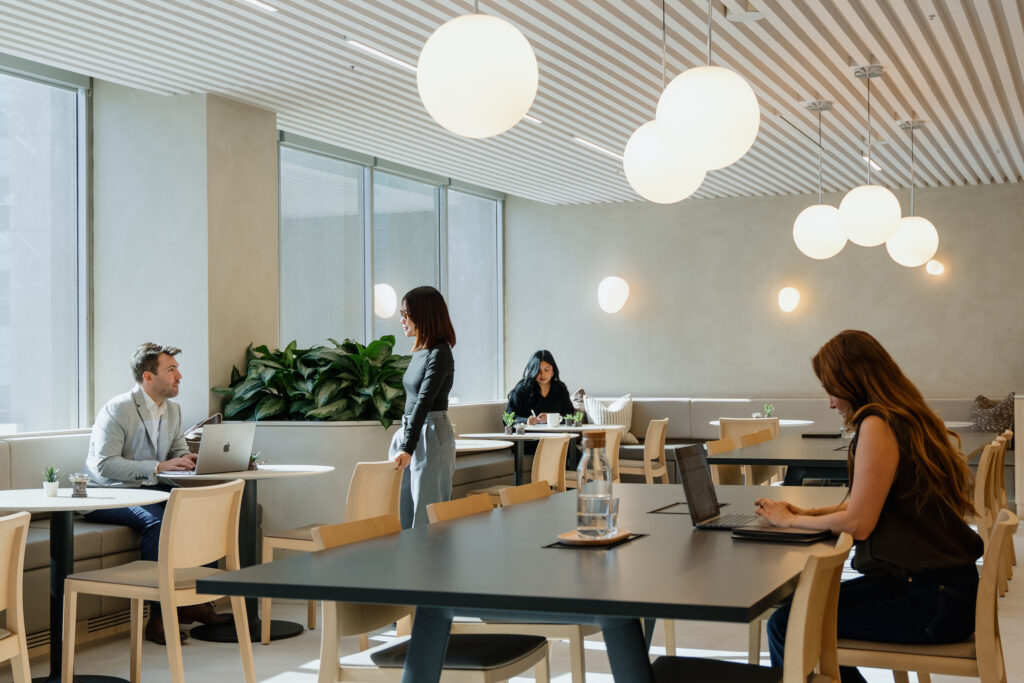
Have you ever walked into Pavilion Beatty and thought to yourself, “Damn, this place is nicer than my apartment”? First of all, you’re not the only one. Second of all, a big part of that feeling is thanks to Toolbox Contract.
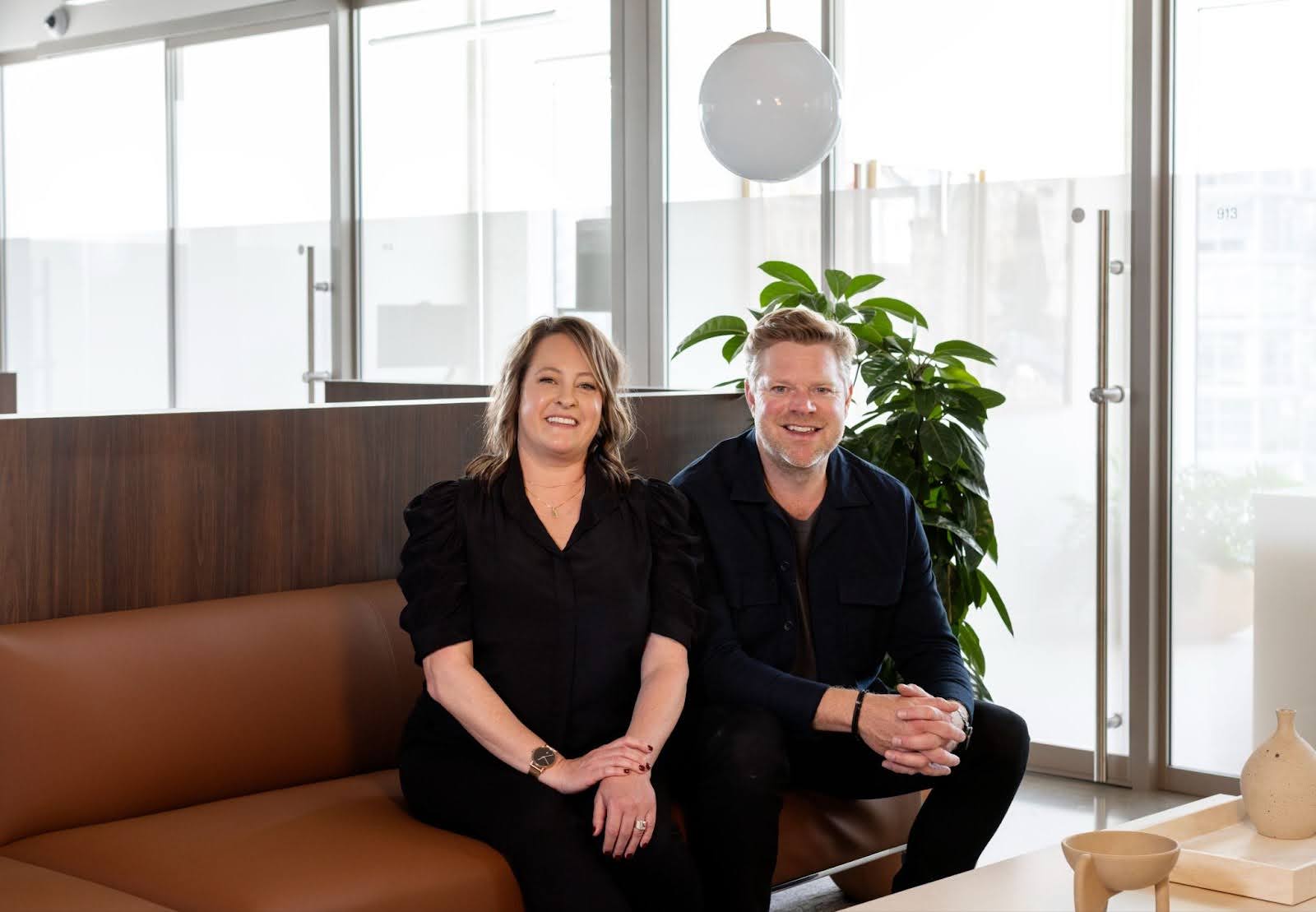
The Vancouver-based company run by husband-and-wife team Paul Sjaarda and Tanya Tweten (he does sales, she does marketing) is a contract furniture agency and distributor specializing in commercial design projects. That means they scour the world for durable, high-end furniture brands that would work well in a commercial setting—such as Emeco, Bolon, Kvadrat, Walter K., Andreu World—and bring those brands to Western Canada.
“Our name refers to a kit of parts, or toolbox, for the trade,” says Sjaarda. “So architects and interior designers have access to a toolbox of products, like flooring and acoustics and fabric and furniture for all different applications.”
Included in Toolbox Contract’s impressive list of projects is, of course, Pavilion Beatty, which also happens to be where the company now makes its head office. Below, Sjaarda discusses Toolbox’s origins, what he looks for in a commercial furniture brand, and more.
What inspired you to create Toolbox Contract?
We started in 2020 and the inspiration was to put together a curated collection of furniture brands that were applicable for contract projects that our clients were looking for in a very much more practical manner than I’d been doing before. Practical in this case meaning European, design-forward products that were applicable for commercial projects in Western Canada.
What types of brands were you looking for specifically?
The furniture collections that we put together were design-forward, but with very commercial applications as opposed to residential. Our main brands would be Andreu World from Spain, Lapalma from Italy, some Danish brands, some brands from Germany. The idea was to have a toolbox of products that architects and interior designers could use for commercial applications, and really pare it down to a curated selection.
What were your criteria when you were sourcing these brands?
Furniture that is designed for commercial applications, contract applications, but that also has a design aesthetic that is more hospitality focused, which blurs the line between the residential and commercial. It’s not residential furniture, so it would need to have a 10-year warranty and be designed for heavy use in public spaces, but also still have the aesthetic of residential or hospitality furniture, which is what a lot of commercial projects are looking for these days—rather than products that are very office-looking.
What, in your mind, does the right furniture do for a room?
The right furniture in a commercial application, I think, makes the space inviting. Certainly for an office application, it should make the space nicer than the employees’ homes. In office applications, that helps with employee retention and the overall vibe.
How has the growth been for the company since its founding?
Growth has been really great. We’ve worked on some really nice projects. We work on a lot of varied projects: we’re working on things like the new Oakridge Mall, and we recently did the art gallery at SFU. We obviously do a lot of office projects and lots of restaurants. The growth has been quite nice since we started five years ago; we’re in our sixth year now, and we’ve added a few brands along the way.
What have been some of the challenges or learnings along the way so far?
The challenge is being a small company and finding the balance between being busy enough and being too busy. I think a lot of small companies have that. That’s something that we’re always trying to work on and smooth out.
Let’s talk about your work with Pavilion.
I worked with them originally with the East 5th location as well as the West 7th location when I was with a different company, before we started Toolbox. And then when we started talking to them about the upcoming Beatty Street location, we decided to work with Pavilion to provide all of the common-space furniture, which is the type of furniture that our products typically fill. We do some desks, but we mostly do the common spaces, so board room furniture, lounge furniture, cafe furniture, reception areas, the acoustic ceilings, the woven vinyl flooring in all the offices—those are the tools in our toolbox that we typically would do in an office space. We worked with Pavilion to supply all our products in all of those spaces for the Beatty Street location, and this is also where we have our office. It’s a great collaboration because it allows us to bring our architect, interior design, dealer, and end-user clients to show them our furniture in a working office environment. It’s like a showroom, but it’s a lot more dynamic than a typical furniture showroom that is not being used at the same time. We have also paired with Pavilion for their new Calgary Courthouse location.
For your own office, what drew you to the Pavilion model?
The Pavilion model is different from other coworking models because it’s very community- and hospitality-focused, and that really aligns with the types of projects and clients that we work with. For the types of office projects we do, it’s really the hospitality shared spaces that we typically provide furniture for, and that hospitality focus of Pavilion really aligns. The aesthetic of Pavilion is much less of an office-type environment than other office spaces and coworking spaces are; it’s much more hospitality-driven.
This interview has been edited and condensed for clarity.