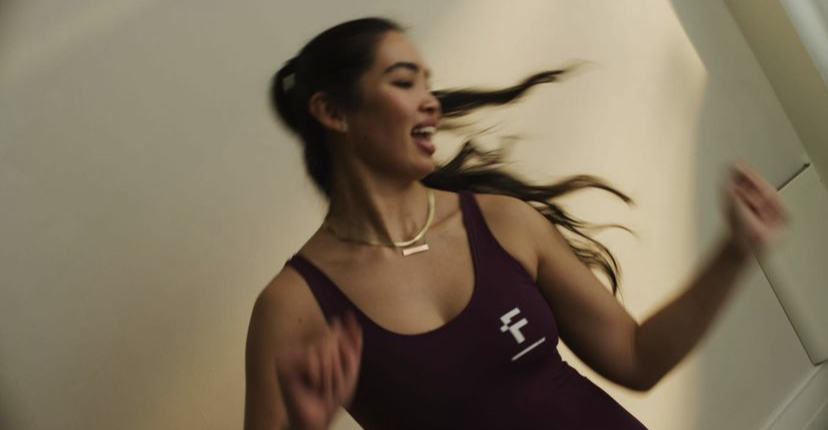
Formation Studio’s mission isn’t to train Vancouver’s next generation of professional dancers. It also isn’t to train adults for onstage performances. Instead, the Mount Pleasant dance studio’sgoal is simple: joy.
For founder Saschie MacLean-Magbanua, it started as a survival strategy. After the tragic and sudden loss of her sister in a car accident in 2014, her grief counsellor encouraged her to seek out movement as a form of emotional regulation.
“I saw that friend was teaching a class to a Beyonce song, and being a Beyonce superfan, I was like, ‘This sounds fun. I know the instructor. It feels like a safe space. I can do this,’” she recalls. “So I went to the class and was surprised and delighted at how present I was able to be, and shocked afterwards that I had taken a complete break from my grief—because that was the only emotion that I had been consumed with in the weeks after my sister passed away.”
She soon started hosting her own Beyonce-themed pop-up dance classes around Vancouver,Calgary, and Toronto, and popularity grew to such an extent that she and her husband, Roman Magbanua, decided to open a dedicated Vancouver studio space in 2019. Less than six months later, though, the pandemic hit, which meant putting in-person classes on indefinite pause. It was tough, but it sure taught her a lot. Below, MacLean-Magbanua reflects on her entrepreneurship journey so far.
Let’s go back to the pandemic lockdowns. How difficult was that time for you?
It was insane. I Googled “What does bankruptcy look like?” because I think it was important to know what all of the potential paths would have been. But at the same time we were like, “Okay, we could also bite the bullet and endure this and then see what’s on the other side.” Because then at least that way, we’d have an option of potentially regaining that deficit. I don’t think any of us expected it to go for as long as it did; it was essentially two years of stunted income. We did do online programming, but we made maybe a tenth of what we needed to cover our lease through digital digital classes, and we took all the government support that we could get to help get us through that. It was maybe 18 months afterwards that we were all able to reopen; and still even now, the focus is on evening out from that period.
It took some time, but I think now many businesses feel the momentum building, and we’re in amore normal consumer period. I feel like every hard thing I could have experienced as abusiness owner, especially a brand-new business owner, happened during that time—the emotional challenges, the logistical challenges, the things that I would never have known thatwe would potentially experience—we went through a lot of that. It was basically an MBA.
Looking back now, what were your biggest learnings from that time?
One thing that really stood out to me was how employees really look to their employers for not only stability, but also official communication. Our being able to disseminate the information that the government was sharing to our team members was a lot more relied on than I anticipated, because most of our team didn’t have other jobs or other corporate experiences, and so they really looked to our guidance. It really emphasized to me how important certain leadership communication styles are. It was a crisis, so being able to provide some sort of stability and comfort and leadership in that time to our team was really important.
Before opening Formation, you worked in communications at Destination Vancouver. What skills from that job have you taken with you into entrepreneurship?
I think I was able to understand the corporate structure and efficiencies and bring that into how We operated our business. That kind of exposure is so valuable, because having a system to rely on is so critical to being able to grow efficiently and manage other people and have expectations set. And I see that even now, when I’m a little softer on some systems or am not as diligent about holding processes, you pay for that. There are consequences to that. So I think having the corporate experience was really about understanding what the hierarchy looked like, what I liked about it, what didn’t, what was efficient, what wasn’t. There was a lot that I learned from that role in communications. It was such a fun job, but my favourite part was being able to interact with people; that’s always been natural to me, and is something that we carry into the studio.
Your pop-ups happened across Canada, but right now your only studio is in Vancouver. How are you thinking about growth these days?
Right now, our focus is definitely still on Vancouver. We’ve had growth in different ways over the years in terms of understanding our market, our product weaknesses and strengths, and also our systems and processes. So the last year and moving forward, it’s still about developing those processes and systems that we can scale or that we would be prepared to scale with in the future. I want to be able to solidify Vancouver, grow our market here, and then hopefully open in Toronto or somewhere else in Canada. I think Toronto would make the most sense for us. Hopefully in the next couple of years we’ll have the ability to do that.
Formation is located next door to Pavilion’s East 5th location, and you have a casual hot desk membership. What have you liked most about it?
I have always appreciated the community element of Pavilion; the staff has facilitated such incredible networking and community-building opportunities. I love the casual hot desk use because I am often at the studio, so I come in after hours a lot, or on weekends, which is also nice because it’s quiet. I really enjoy the flexibility, and seeing familiar faces and meeting people at the coffee machine.
Once I started coming here after having a kid, I was like, “Oh, this is the only place that I get work done.” Because at home now it’s just not the same; I have to be out of the house in order to get work done. So this is a sanctuary for me: a hot cup of coffee that is hot for the entire time I drink it. That’s such a mom cliche, but it’s so true. Peace and quiet, a clean space: nothing is better to me.
This interview has been edited and condensed for clarity.